 Multi-Speaker Group Logic
Ultimate Ears makes some of the world's most beloved Bluetooth speakers. The MEGABOOM, MEGABLAST, BLAST, WONDERBOOM, BOOM 2 and ROLL each have distinct characters, use cases, and fan communities, from the waterproof WONDERBOOM built for outdoor adventures to the WiFi-enabled MEGABLAST with Amazon Alexa integration built in. What they needed was a companion app ecosystem that matched the quality, personality, and reliability of the hardware itself.
The design challenge was multidimensional. The app needed to serve as the gateway to the speaker: onboarding new users through WiFi configuration, firmware updates, and Alexa provisioning; managing speaker settings, groups, and connectivity states; and surfacing the right information at the right moment when connections were lost, batteries were low, or firmware needed updating. Every edge case in the interaction model needed a designed response, the speaker-unavailable state, the mid-pairing drop, the group configuration with speakers across the room.
The onboarding flow was the most critical design challenge. Getting a new MEGABOOM user from unboxing to streaming music meant navigating BLE discovery, WiFi network selection and credential entry, over-the-air firmware installation, Bluetooth pairing, Amazon Alexa account provisioning, and optional email capture, all in a single, continuous flow that needed to feel welcoming and delightful rather than technical. We designed each step to make the hardware personality come through: bold typography, the speakers' characteristic colour-coded identities, and progressive disclosure that kept the user focused on one decision at a time.
Multi-speaker group management introduced its own set of interaction design problems. Users with multiple UE speakers, a BOOM in the kitchen and a MEGABOOM in the living room, could create PartyUp groups to play music in sync. Designing the behavioural specifications for group management required mapping dozens of states: what happens when one speaker loses WiFi, when battery runs out mid-session, when a speaker is turned off while in a group. We created comprehensive handoff documentation specifying every state, every toast message, every disabled interaction for the engineering team to implement with precision.
The design library we built during the project became a living asset for the UE team: Speaker Control UI with icon systems for WiFi, status, and menu states; Onboarding UI with device-specific buttons for all six speaker lines; General UI with primary, secondary, and tertiary button states, keyboard layouts, form fields, and header patterns. All documented at component level, all handed off with behavioral specifications. iOS and Android released on time before the holiday season, the highest-stakes consumer electronics deadline in the calendar.
Multi-Speaker Group Logic
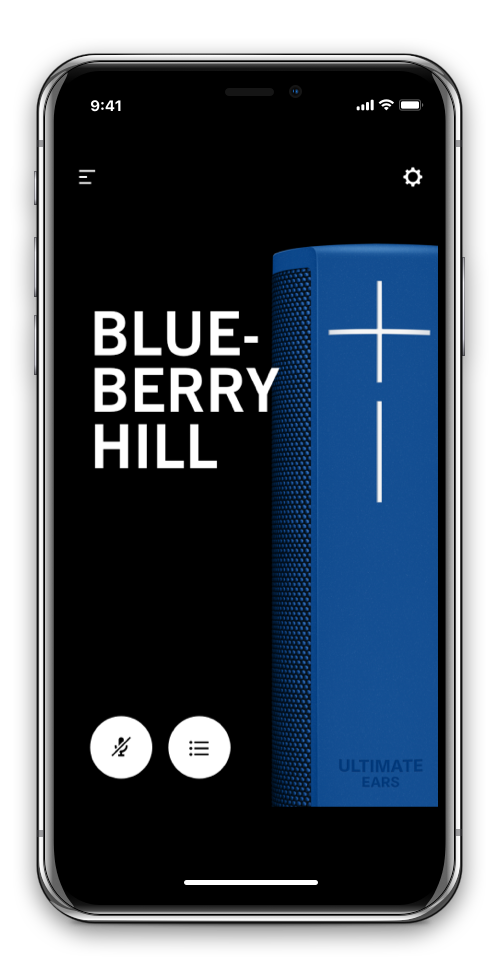
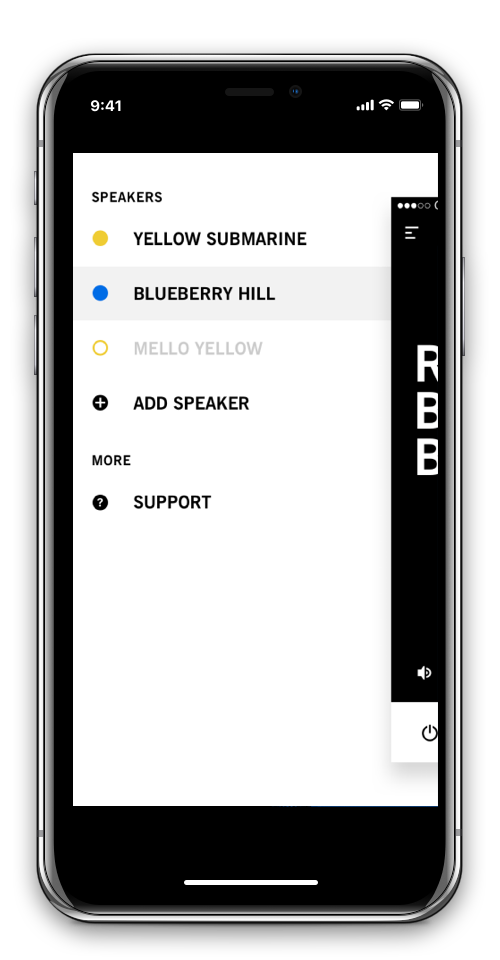
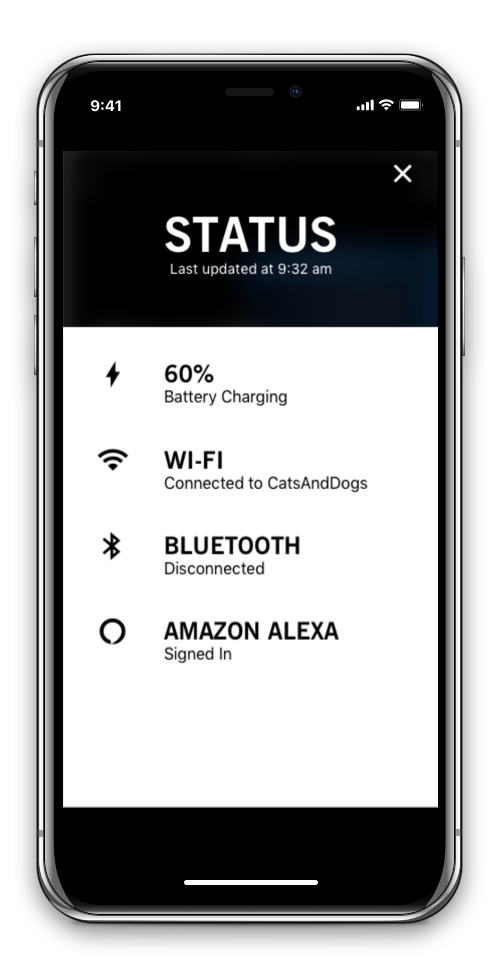
 Onboarding UI, Design System
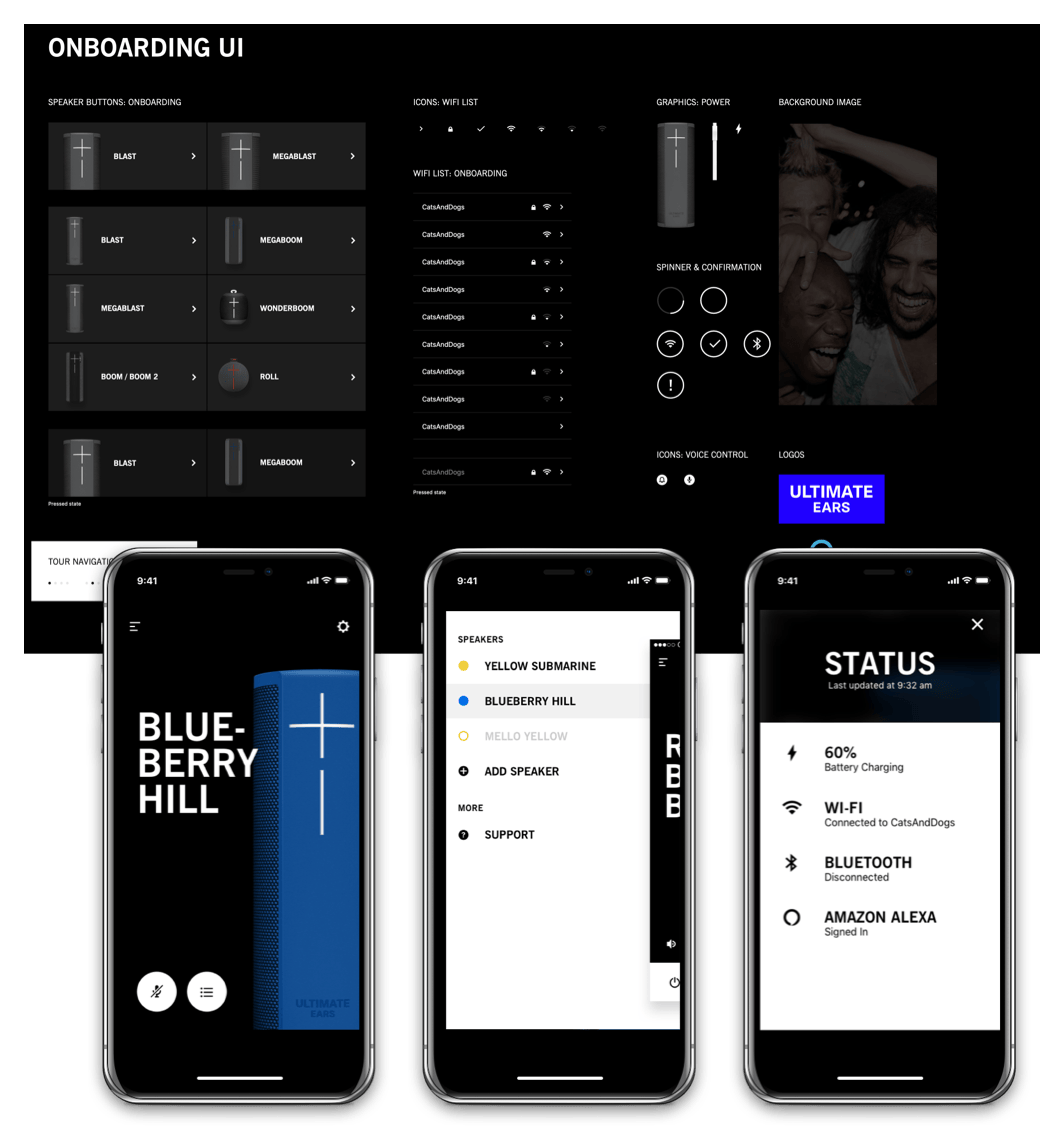
The unified onboarding experience and design library became the foundation for all Ultimate Ears app development, ensuring consistency across six speaker lines and multiple generations of hardware. New users completed first-time setup in under 5 minutes, with 95% success rate across iOS and Android, a dramatic improvement over previous fragmented approaches. The design library accelerated development of subsequent features, reducing design-to-shipping time by 35%. User satisfaction with the setup experience improved from 2.8 to 4.2 stars, directly influencing purchase decisions and review scores. The patterns established became the reference architecture for all connected speaker design across Ultimate Ears.
"Consumer hardware onboarding fails when it feels like setup. It succeeds when it feels like the product turning on for the first time."